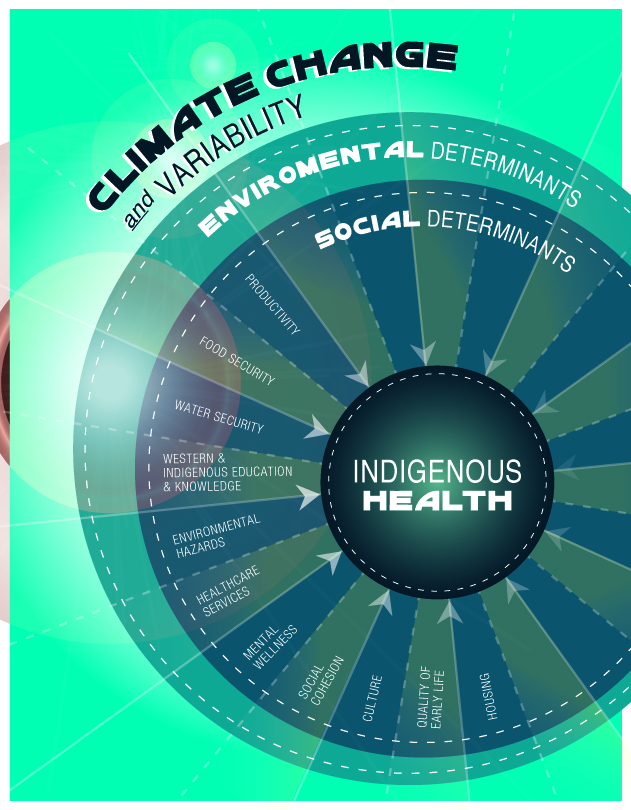
New Article Published: Climate-sensitive health priorities in Nunatsiavut, Canada

Fig 3New Publication!

Our new published article presents the results of an exploratory study that used participatory methods to identify, characterize, and rank climate-sensitive health priorities in Nunatsiavut, Labrador, Canada.

Citation:

Harper, S.L. Edge, V.L., Ford, J., Cunsolo Willox, A., Wood, M., IHACC Research Team, Rigolet Inuit Community Government, and McEwen, S.A. (2015). Climate-sensitive health priorities in Nunatsiavut, Canada. BMC Public Health, 15:605.  Click here to read the article (open access).

Abstract:

Background: This exploratory study used participatory methods to identify, characterize, and rank climate-sensitive health priorities in Nunatsiavut, Labrador, Canada.

Methods: A mixed method study design was used and involved collecting both qualitative and quantitative data at regional, community, and individual levels. In-depth interviews with regional health representatives were conducted throughout Nunatsiavut (n = 11). In addition, three PhotoVoice workshops were held with Rigolet community members (n = 11), where participants took photos of areas, items, or concepts that expressed how climate change is impacting their health. The workshop groups shared their photographs, discussed the stories and messages behind them, and then grouped photos into re-occurring themes. Two community surveys were administered in Rigolet to capture data on observed climatic and environmental changes in the area, and perceived impacts on health, wellbeing, and lifestyles (n = 187).

Results: Climate-sensitive health pathways were described in terms of inter-relationships between environmental and social determinants of Inuit health. The climate-sensitive health priorities for the region included food security, water security, mental health and wellbeing, new hazards and safety concerns, and health services and delivery.

Conclusions: The results highlight several climate-sensitive health priorities that are specific to the Nunatsiavut region, and suggest approaching health research and adaptation planning from an EcoHealth perspective.
Vivienne Attends the CoPEH Canada Workshop/Symposium/Field School

Written by Vivienne Steele 11429632_10155750352350188_1822966470_nThis June, I participated in the two-week field school for Community of Practice in Ecosystem Approaches to Health Canada (CoPEH-Canada) – Communaute de pratique canadienne en approaches ecosystemiques de la santé, which was hosted by Université de Québec à Montréal (UQAM). The course, which welcomed students from Canada, Latin America and the Carribbean (CoPEH-LAC) and West Africa (CoPES-AOC), was focused on the health of the St-Lawrence river ecosystem through a 3-day workshop, a 1-day symposium and a 9-day field course organized by CoPEH.

As part of the 3-day workshop, the group organizers exposed us to a variety of topics in EcoHealth through information sharing sessions, field trip outings and reflective journal assignments. We were guided through Montreal’s Old Port to better understanding the environmental challenges facing the St-Lawrence river; such as management of used industrial waster, of drinking water distribution and of marine transport regulation in the port. At Parc des Rapides, a brief ride west of downtown, alongside the Lachine canal, we were shown some of the flora and fauna being protected around the Lachine rapids island area (snapping turtles, Great blue herons, balsam poplar, etc.). As a great complement to the day’s discussions on systems thinking, ecosystem resilience and active eco-toxicology projects in the St-Lawrence river region, we shared our “sense of place in nature” experiences through a wonderfully-led traditional sharing circle.

The day-long symposium, hosted by CoPEH field course alumni, was built upon the base topicc of ‘self-organizinsg systems’ in the context of environmental health. As the leaders encouraged us to ‘self-organize’ into groups, we had a great opportunity to network, to share, and to reach agreements on our definition of the role of self-organizing groups in environmental health research.

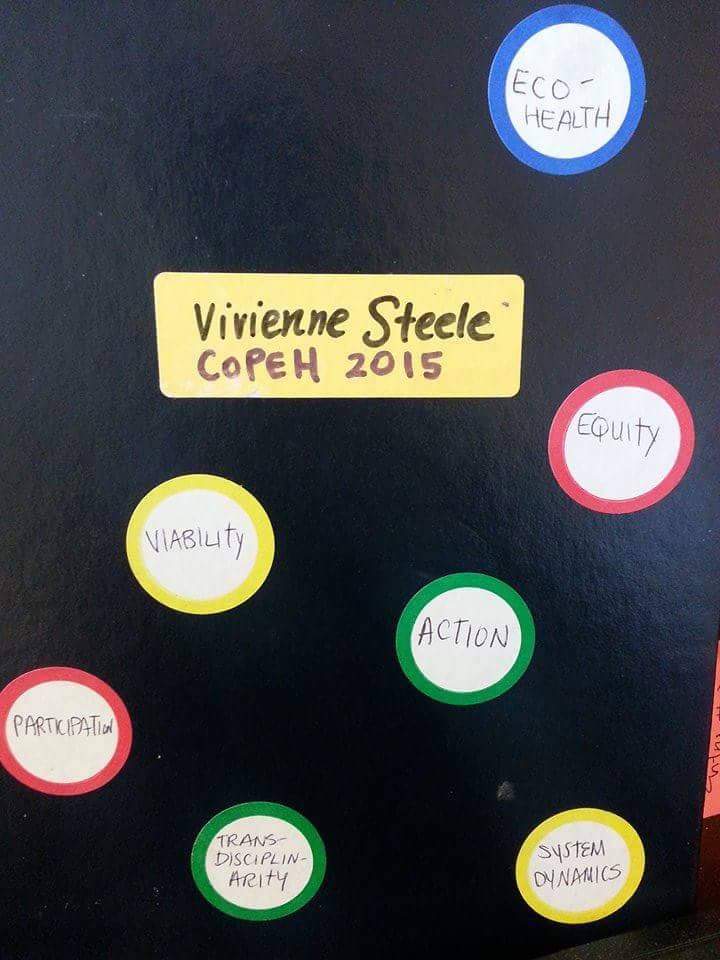
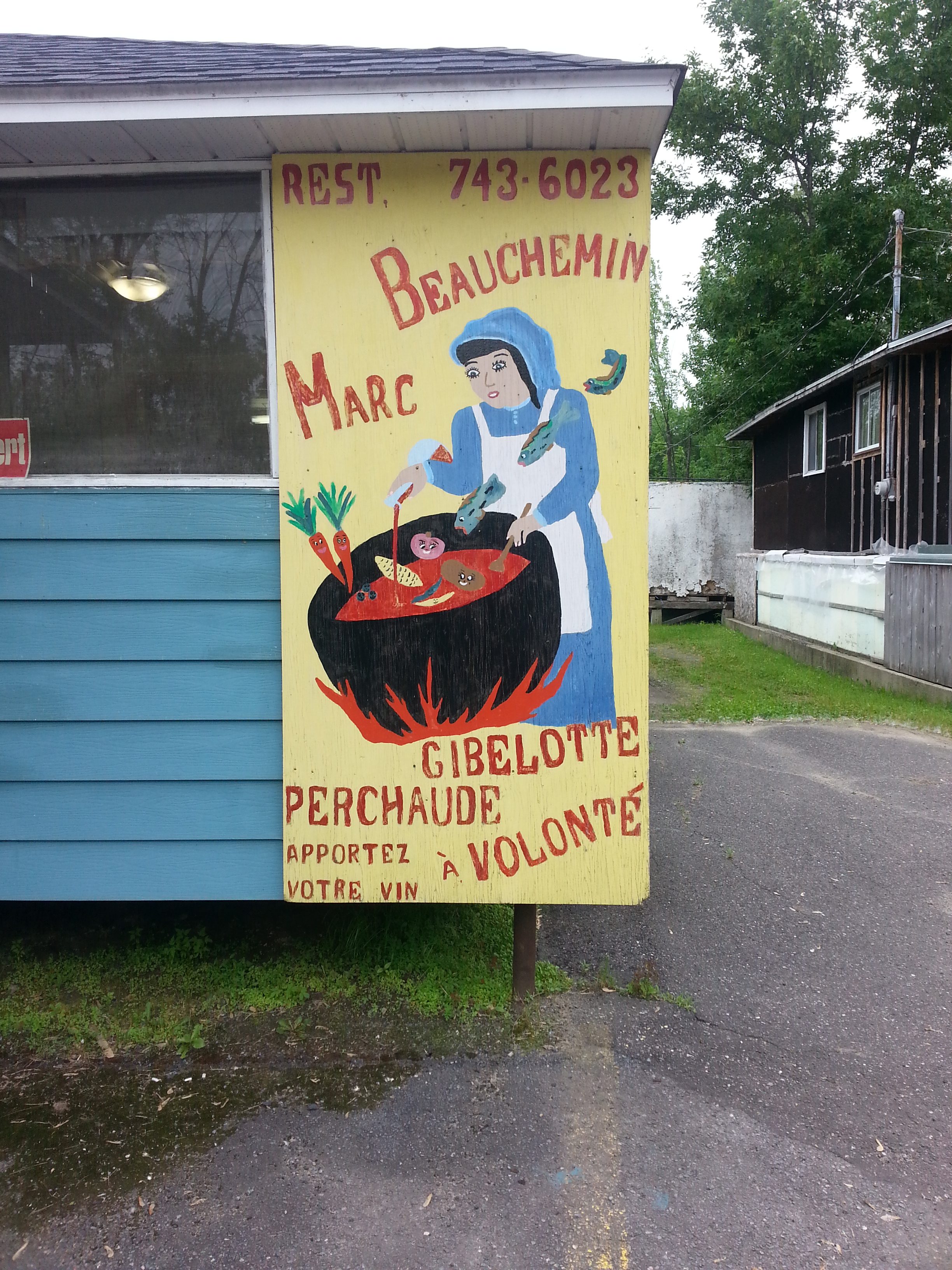
The nine-day field course was organized in sessions, which revolved around the six principles of EcoHealth: equity, viability, transdisciplinarity, system dynamics, participation and action. Each of the nine day involved understanding several different (and interconnected) principles through lectures, field trips and group work . One day, for example, we discussed the principles of systems thinking, transciplinarity and participation through a lecture on narratives, a field trip to Montreal’s Center for Sustainable Development (Maison du développement durable) and a group activity on social movements. A highlight of the course was the field trip to Sorel, which is a community southeast of downtown Montreal. Guided by the assigned “rich picture map” group task, we snapped photos of the day’s activities, which we were to be presented to our fellow classmates. Our photos showed the boat tour along the Yamaska river (we learned about the river system’s currents, nearby maritime trade routes, and the overall health of the shoreline), the aquatic species identification activity (we donned hip waders and dragged a heavy net through a small stream area) and lunch at a local riverside restaurant (we ate fried 20150612_132835 (1)perch and catfish stew from the nearby river). The day concluded with a talk on measuring contaminants and their effect on ecosystem health, and a presentation by a community conservation group whose focus is to increase public awareness of the importance of the river. Due to this day’s diverse schedule, we had managed to capture photos of many aspects of the St-Lawrence river ecosystem, and were able to organize them onto our “rich picture map”. Our map’s main feature was hourglass-shaped river sketch, onto which we organized the photos on the top or bottom of the hourglass; where the top showed a healthy, well-managed river system and the bottom showed an unhealthy, poorly-managed and deteriorating river system. In our group’s concluding presentation, we showed how good management and a community involvement can maintain the complex, healthy ecosystems as desired at the top of the hourglass. We are lucky to live so near to the St-Lawrence river ecosystem, and the time is now for us to act to maintain the health of the ecosystem.

While the jam-packed and excellently organized schedule allowed for participants to share knowledge and build valuable relationships, it has also left me inspired by what I have learned and the people I have met. After a couple days’ rest and reflection, I look forward to incorporating ecosystem approaches to health in my upcoming research project.

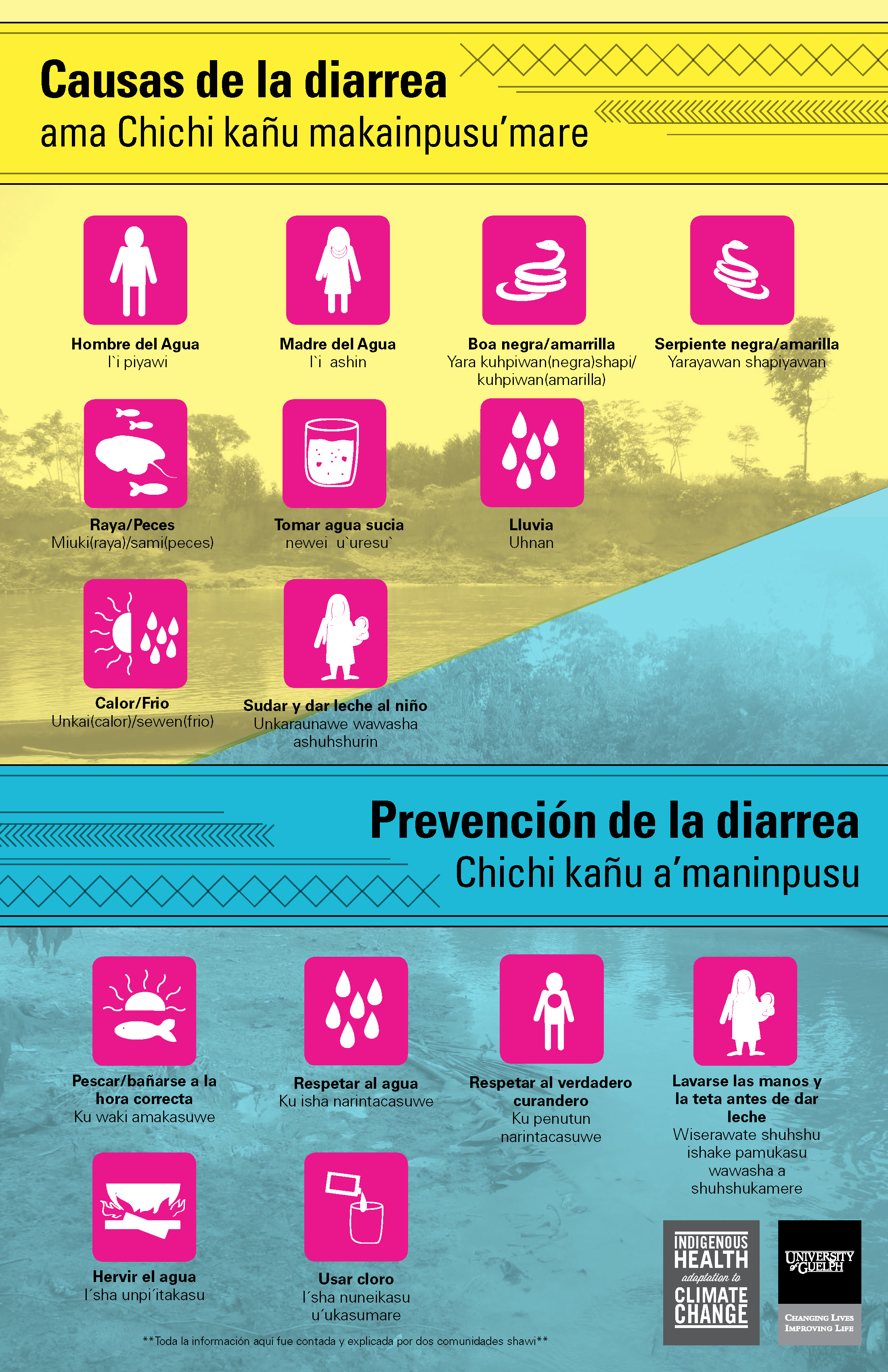
Perceived causes of diarrhea for Indigenous Peruvian Shawi

Rebecca Wolff has returned to Peru to begin sharing and validating her research results.  To facilitate the process, Rebecca has created booklets for government and non-government stakeholders, and a poster for each household in the communities she worked with.

Booklet:

[embed]http://issuu.com/sherilee.harper/docs/folleto-_rebecca_wolff.pptx/1[/embed]

Poster:

IHACC_WaterPoster

(designed by André Mersereau)

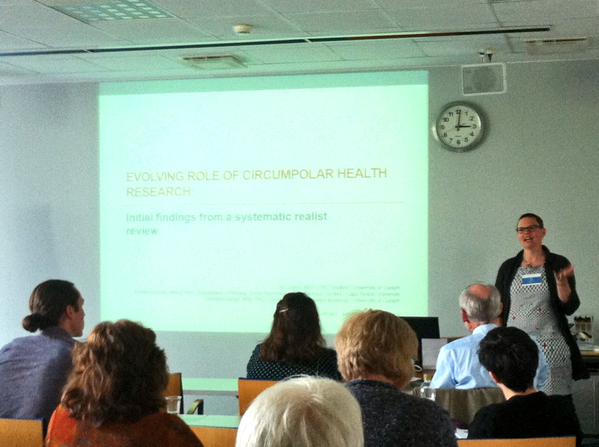
Jen Jones Questions Who Circumpolar Health Research is Serving at the 16th International Congress on Circumpolar Health

CHI8amEWgAAm9NrJen Jones, PhD Candidate and Trudeau Scholar presented at the 16th International Congress on Circumpolar Health in Oulu, Finland.  In her oral presentation,entitled "Bridging dichotomies in Circumpolar health research: Findings from a systematic realist review", Jen questioned who Circumpolar health research serves.

Presentation Abstract:

Jen Jones, Ashlee Cunsolo Willox, Sherilee Harper (2015) Bridging dichotomies in Circumpolar health research: Findings from a systematic realist review. Oral Presentation at the 16th International Congress on Circumpolar Health, Oulu, Finland.


"Indigenous populations in the Circumpolar North continue to experience health inequities and social inequalities that challenge policy makers, community leaders, and health workers to make sense and use of available research. Yet the response to health disparities compounded by the heterogeneity of populations in the North, has not resulted in an approach or conversation that speaks to tensions between large-scale population health-based research that aim to produce replicable data and community-situated and often small in sample size approaches. If the aim of those working in research, healthcare, policy, or programming is to support health and wellbeing in Circumpolar regions, it becomes incumbent upon on all to consider how findings using a multiplicity of approaches can work together. This issue is particularly germane given that communities have charged traditional epidemiological approaches of not being able to respond to complexities and nuanced issues that inform health and wellbeing. However, findings from both large empirical approaches and community-driven research can support Northern communities address systematic health disparities. Building from a place of strength and recognizing that health research in the Circumpolar North is committed to responding to community level concerns, this presentation communicates findings from a systematic realistic review. Practices from those working in Circumpolar health are shared in effort to stimulate conversation to bridge perceived dichotomies of quantitative/qualitative, Western/Indigenous, and empirical/community driven research approaches as well as underlying assumptions that frame health research. Findings from this review seek to offer ground where researchers, communities, healthcare, other health professionals, and decision-makers using these multiple approaches can communicate findings resulting in customized, locally appropriate responses to health and wellness issues in the North."

(Photo taken by Ashlee Cunsolo Willox)

Bon voyage Paola!

We had the pleasure of hosting Dr. Paola Torres Slimming at the University of Guelph over the past month.  Paola is a medical doctor from Peru, who is conducting her PhD work in Epidemiology at Universidad Peruana Cayetano Heredia (UPCH) with the IHACC project.  Paola visited Guelph for a month through a EkoSanté (ecohealth) scholarship. We will miss you Paola - and we look forward to welcoming you back to Guelph in 2016!

Research Workshop: Day 2 in Montreal

Written by Vivienne Steele On Day Two of the Preparing, Partnering and Participating in Fieldwork Workshop at McGill, Kate introduced some main topics of participatory epidemiology (PE) and community-based participatory research. In the morning session, the group discussion was focused on the benefits and drawbacks of PE research methods. Many useful resources were provided on USBs, including a full guide to PENAPH’s (Participatory Epidemiology Network for Animal and Public Health) course on participatory epidemiology methods. We then discussed strategies for conducting interviews and focus groups, and how to adapt the questions used during the session in particular. Next, several participants provided examples of participatory data collection techniques, including participatory mapping, participatory timelines, simple and pairwise ranking and proportional piling. In each of these techniques, we practiced applying them in small-group settings, conferring after to discuss the advantages and disadvantages of each. After all the jellybeans from the participatory piling technique had been consumed, we wrapped up the day with a discussion on the uses and potential analyses techniques of the participatory epidemiology methods we had practiced during the day. The workshop was a wonderful opportunity to learn and exchange with one another - I look forward to taking this knowledge with me to my next field work experience!


Research Workshop: Day 1 in Montreal

Written by Vivienne Steele Today was Day One of two of the Preparing, Partnering and Participating in Fieldwork Workshop at McGill University in Montreal. Together with students from Dr. Harper’s, Dr. Berrang-Ford and Dr. Ford’s labs, we spent a full day sharing experiences, lessons and suggestions for working with communities in research. In a group setting, we generated definitions for global citizenship, privilege, and positionality in the context of research within IHACC’s partner communities. Many students had visited, or are planning to work in one or more of IHACC’s partner regions, and this provided a great platform and opportunity to share general pre-departure and arrival tips, for both urban and rural settings. The conversation generated excellent examples of the importance of building and maintaining relationships in communities, and being prepared to maintain these relationships when you return home. Budgeting, safety, contingency planning and solution-oriented problem solving in the context of international or different cultural situations were the discussion topics for the afternoon. We concluded the day with a series of “sharing circles.”  Today’s rich discussion was a great way to talk about the challenges and value of fieldwork, and we look forward to day two!


Wrapping Up: The End of Winter'15 Semester

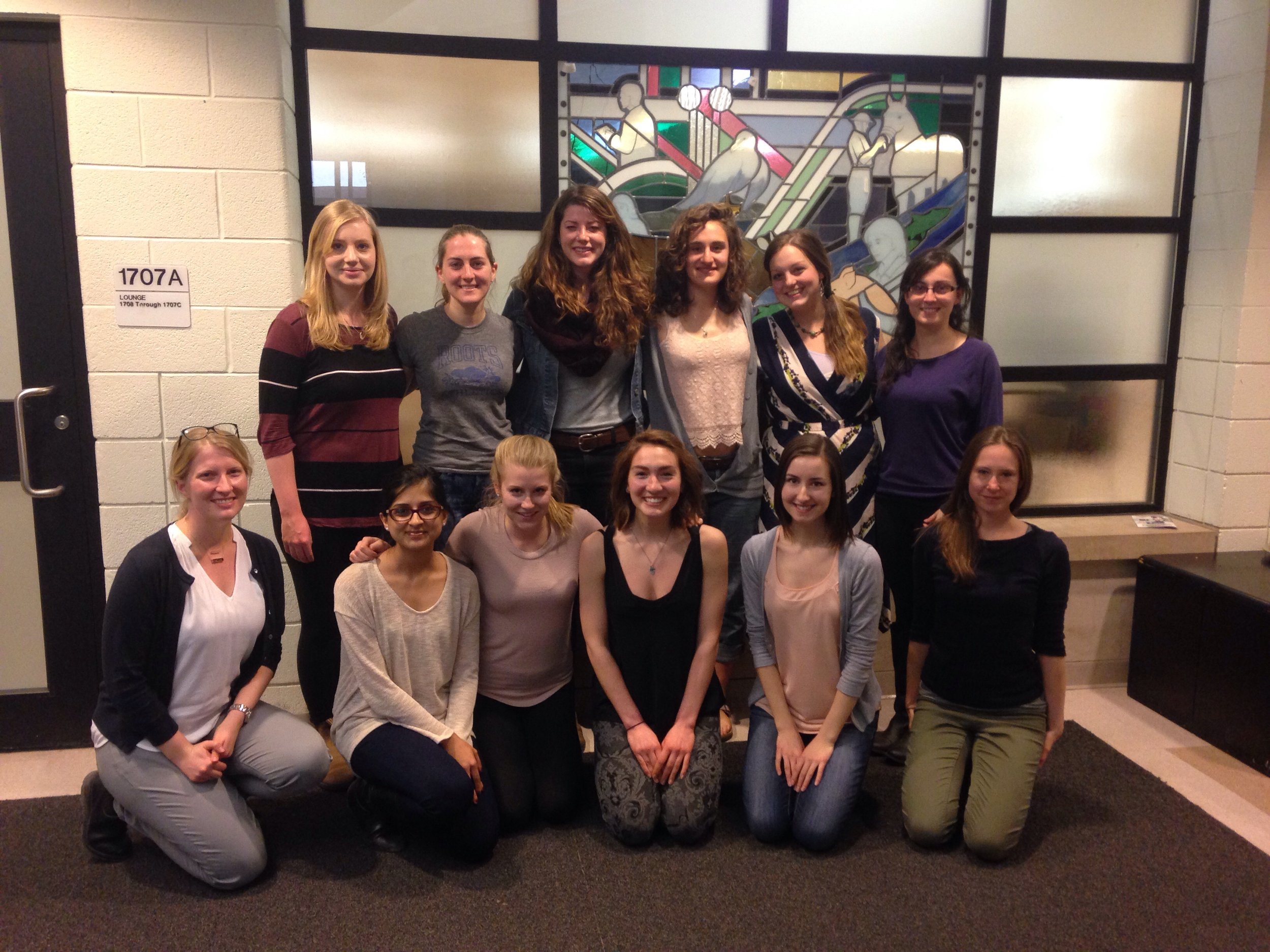
Harper Lab1We recently had our last lab meeting of the Winter 2015 Semester! The EcoHealth Lab will be seeing many students graduate this semester, and we want to say a big congratulations to each of them again! The students have all worked so hard this year, and the rest of the lab is very proud of them! Congratulations to all of you, and the very best of luck to each of you in your endeavours beyond Guelph!
Postcard from Vietnam: Steven in Hanoi!

Written by Steven Lam, MPH Student Prior to finishing my MPH degree, I was given the opportunity to come to Hanoi and work on a research project; an experience made possible through the Mitacs Globalink Research Award.

While I felt a bit terrified, just having basic knowledge of Vietnamese, and meeting my Vietnamese supervisors just once last year, I knew I would not let this opportunity pass up. It’s been a whirlwind of new experiences since I arrived in Hanoi just 3 months ago.

I am working on a project titled “health risks of agricultural intensification in Vietnam” with Sherilee Harper at the University of Guelph, Dr. Tran Thi Tuyet Hanh at the Hanoi School of Public Health, and Dr. Nguyen Viet Hung at the International Livestock Research Institute. Our research focuses on animal and human waste management, a growing concern among public and policy makers alike. Increased livestock production, combined with traditional technologies and management practices may present risks to humans and the environment. This international collaboration seeks to better understand what these risks are, explore challenges and solutions, and inform policy. Understanding and addressing waste management issues are needed for sustainable agricultural production while protecting human health and natural resources.

Through my research I have had the pleasure of interviewing key stakeholders and farmers to explore waste management issues, as well as explore traditional and innovative waste treatment systems on farms. Community members were very open in sharing their culture, practices and beliefs. Interactions with stakeholders have been quite motivating – it’s refreshing to hear from individuals passionate about their research/work.

In my free time, I like to explore Hanoi and surrounding cities by motorbike, try different street-food and practice my Vietnamese with locals. The latter has been extremely helpful, as eventually I was able to conduct some interviews partly in Vietnamese (Thank you Ms. Huong for helping with translation!).

The best parts of this experience are working with talented researchers, building long-lasting relationships, and connecting with local farmers and key stakeholders. I can confidently say that my brief stay in Vietnam so far has been one of the most rewarding experiences, to both my personal and professional development. While my stay in Vietnam is almost over, I look forward to focusing on data analysis and reporting, as well as share my experiences with friends, colleagues, and staff back in Canada.

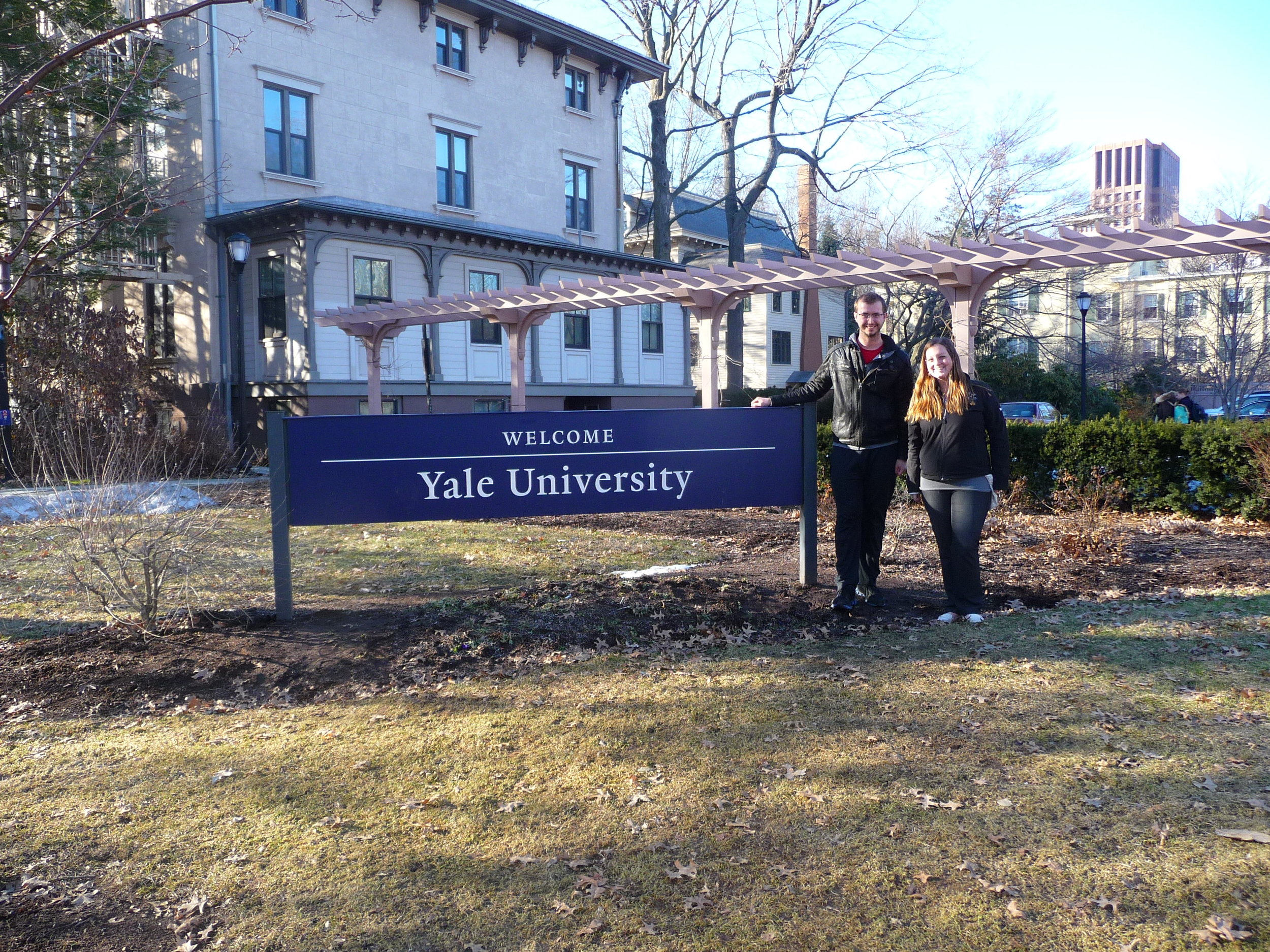
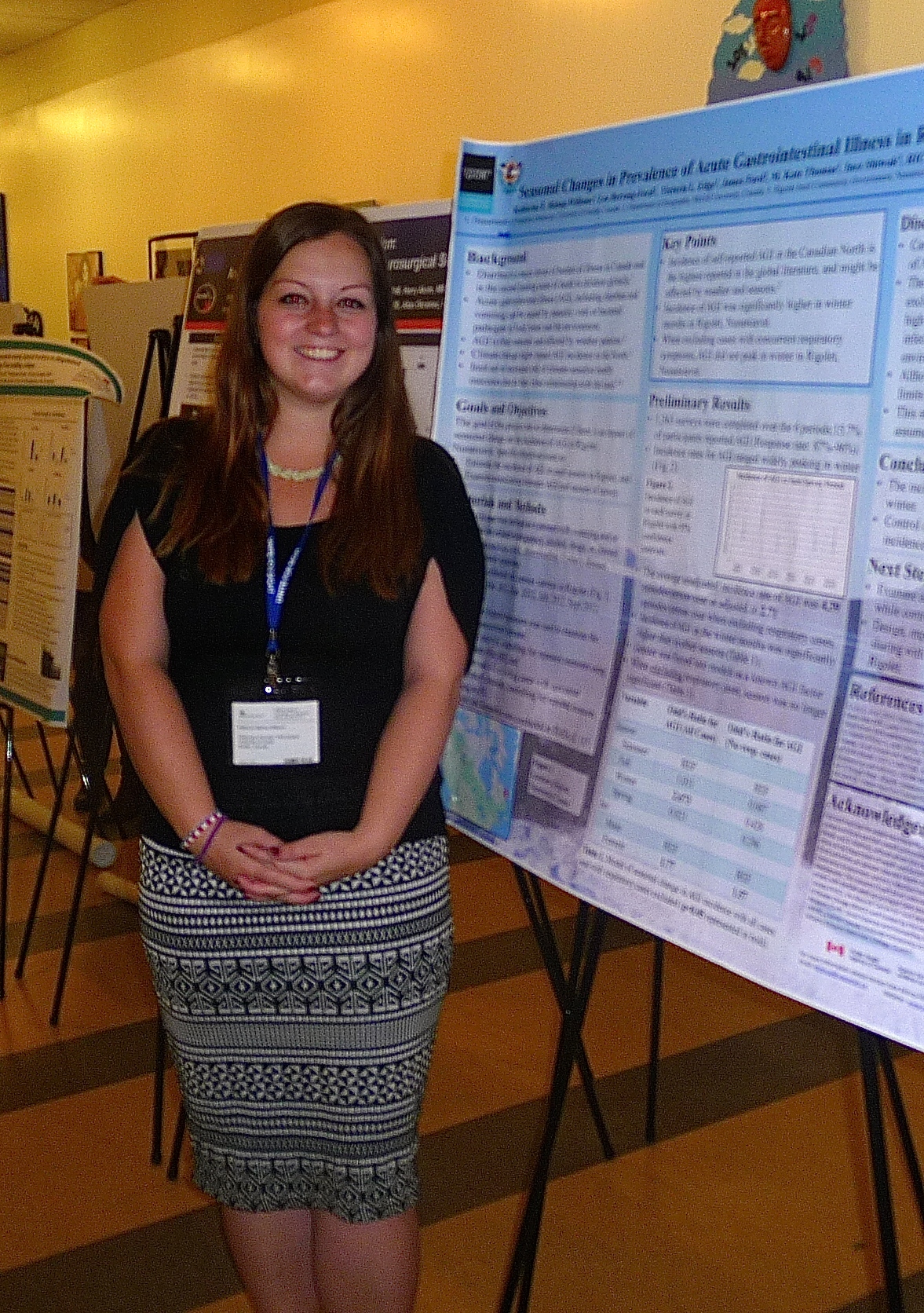
Kate Bishop-Williams presented her work on AGI seasonality in Nunatsiavut at Yale's Global Health Innovations Conference

Best8On Saturday March 28th, Kate Bishop-Williams presented her research entitled Seasonal changes in prevalence of acute gastrointestinal illness and concurrent respiratory symptoms in Rigolet, Nunatsiavut, Canada at the Yale University Global Health Innovations Conference in New Haven, Connecticut. Kate’s abstract selected as one of only 65 student posters from hundreds of submissions from across the United States and around the world. Kate also had the opportunity to meet with former IHACC student researcher Joe Lewnard while at Yale University, and discuss experiences from past and present in Uganda!Best5

 Sierra Clark presented her work on AGI among the Batwa at the Geography Honours poster session at McGill

Sierra is presenting her honours thesis work looking at the burden and lived experience of self-reported20150327_1423341-234x300 acute gastrointestinal illness (AGI) in an Indigenous Batwa-Pygmy population in southwestern Uganda at the Geography Honours poster session today at McGill University.
We take this opportunity to congratulate Sierra on her thesis work!
If you are interested in learning more about Sierra’s work, please read her latest article, published in Epidemiology and Infection in December 2014:

Clark, S., Berrang-Ford, L., Lwasa, S., Namanya, D.B., Edge, V.L., IHACC Research Team, and Harper, S. (2014).The burden and determinants of self-reported acute gastrointestinal illness in an Indigenous Batwa Pygmy population in southwestern Uganda. Epidemiology and Infection, [Epub ahead of print].

ME-300x225


Congratulations to Vivienne Steele!

A special congratulations to Vivienne Steele for winning a CoPEH-CAN Graduate Training Award ($1,000) to attend the 2015 EcoHealth Workshop and Field School.  This year, the course is hosted in Montreal and is entitled "the health of the St Lawrence: from yesterday to today."  Last year, lab members Ellen McDonald and Kate Bishop-Williams won the award. Congratulations Vivienne!

Kate Bishop-Williams Presents at the IECID in Spain

Kate Bishop-Williams presented her preliminary research findings from Rigolet, Nunatsiavut at the first ever International Conference on the Impact of Environmental Change on Infectious Diseases in Sitges, Spain on Monday, March 22, 2015. Kate’s research is entitled: Seasonal changes in prevalence of acute gastrointestinal illness and concurrent respiratory symptoms in Rigolet, Nunatsiavut, Canada. This research was supervised by: Dr. Sherilee Harper, Dr. Lea Berrang-Ford, and Dr. Victoria Edge, and conducted in collaboration with Dr. Kate Thomas, Dr. James Ford, Inez Shiwak and the IHACC research team. Kate’s trip was funded by a Latornell scholarship at the University of Guelph.