Congratulations Sierra! For more details:
http://www.mcgill.ca/globalhealth/students/global-health-poster-fair
Congratulations Sierra!
For more details:
http://www.mcgill.ca/globalhealth/students/global-health-poster-fair
Written by: Kate Bishop-Williams
I have had the great pleasure of attending the Safety and Health of Rural and Agricultural Populations (SHARP) Conference this year in Saskatoon. It was a great experience, and one of the best conferences I have attended yet! Day 1 was spent at an interesting and informative ONE HEALTH: Team Science Training workshop with a great group of students and faculty researchers from across Canada and abroad. The most interesting part of the session for me, was to hear about a series of exciting initiatives that U Sask is working on in One Health and transdisciplinarity. One such initiative is CREATE, a collaboration between U Sask, Berlin and a medical school in India. The program involves a one semester online course in group science, a one semester online seminar course, an intensive field school (where all international candidates come together) and a 2-4 month externship with partners like PHAC. We also heard about the School of Environment and Sustainability at U Sask and PHARE a Public Health, Agriculture and Rural Health and Environmental Health consortium.
 The conference is being held in the Delta Bessborough, and it is absolutely gorgeous! The conference rooms where I and others have presented are quite spectacular.
The morning session was of particular interest to me today, as I was pleased to hear reference, more than once, to the impact of climate change on the health of rural and Indigenous populations. Moreover, both heat stress and water issues were mentioned, and the impact these had on workers and those living in these communities.
I had the opportunity to present in the William Pascoe building, a room for almost 100 audience members. I gave a talk on the 3rd project of my MSc thesis, likely for the last time. This project is particularly important to me, as it is a research 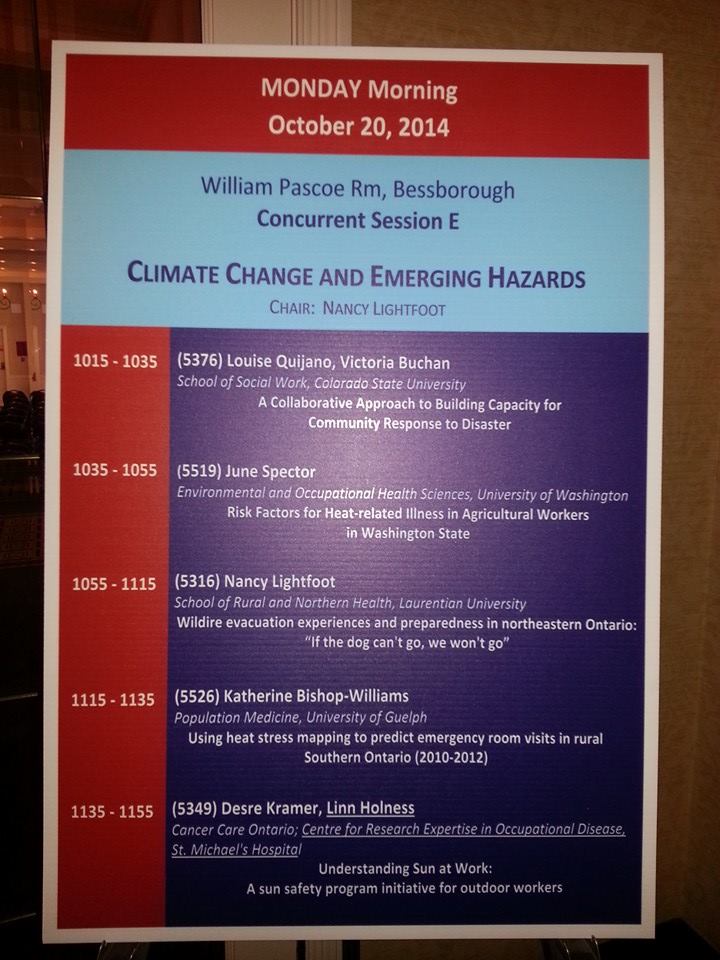 question that I developed independently, including suggesting the methods used. I personally contacted the 50 hospitals in rural Southern Ontario and secured a great response rate of 48%. I am incredibly proud of this work, as working with institutions such as hospitals can be challenging for reasons such as ethics and access to information. I presented at 11:15 AM, and was thrilled to have good attendance in the room, a full 15 minute slot to present, and a great discussion period to follow the presentation. I distributed my remaining infographics of the poster which was designed for this project (EcoHealth 2014, Montreal), and this again generated great conversation.
The highlight session for me today, was a presentation by Dr. Susanna von Essen from the University of Nebraska. Dr. von Essen presented on the impacts of One Health in the successes of controlling a number of zoonotic pathogens.
I spent the afternoon in a series of presentations related to Indigenous Health in Canada and the links to New Canadian health problems. One such topic which was quite interesting in this session, was the topic of barriers to health care for Indigenous populations, both in remote regions and also in urban areas.
The SHARP meeting also coincided with the Built Environment and First Nations Health: Addressing and Redressing the Issues meeting. This meeting shifted the focus of SHARP from primarily workplace and rural health based to Indigenous Health. The keynote speaker this morning was the highly acclaimed academic, Dr. Malcolm King. Dr. King presented on the changes in CIHR’s strategic plan and addressed a number of issues with regards to applying for Tri-Council funding through the Institutes for Aboriginal Health. While I have pages of notes related to Dr. King’s engaging and fascinating 60-minute talk, I will only share a few highlights. Dr. King pointed out that successful grants are now showing ways in which they will address research questions by integrating the use of both Indigenous and Western knowledge. Dr. King shared a series of National Aboriginal Health Organization (NAHO) Determinants of Health. Predominantly in Public Health we study the PHAC Social Determinants of Health, however, of interest in the NAHO series, was the highlighting of climate change, environmental condition and food security issues, missing from the PHAC social determinants of health. Dr. King suggested that the solutions are to lead with Aboriginal People’s focused interventions, which are both population specific and culturally relevant.
Dr. King’s talk was an excellent way to set the tone for the day, and I was thrilled to be able to introduce myself to him later in the day. As a long-standing chair of CIHR and the Institutes for Aboriginal Health, Dr. King was quite familiar with the IHACC project, and we chatted for a few minutes about possible directions for my research.
I was able to attend the Built Environment and First Nations Health: Addressing and Redressing the Issues meeting and network with researchers working in Saskatchewan on issues facing many other Indigenous communities in Canada. This session included both a morning and an afternoon session, and was exceptionally well organized. The sessions were organized where presenters were asked to move between tables to present their research conversationally in groups of approximately 10 people. By doing this, conversations with regards to the research, questions and comments were rich and important. The researchers would introduce themselves at each table, provide a 5-10 minute overview of their work and a 2-sided handout summarizing key points and results, and the rest of the time was spent discussing with the group. This allowed rich and deep themes to emerge. The overarching theme for the day was respiratory illness as it related to housing issues, yet we spent much time discussing policy and integration of Indigenous ways of knowing, obesity/ diabetes, residential schools and multi-generational traumas, over crowding and climate issues. Again, I have pages and pages of notes that I wont get into the details of, but the experience of a conference this way was not only refreshing, but also incredibly rewarding. I learned so much more in this informal and comfortable setting than I could have by hearing presentations all day, and I am more equipped to apply what I learned to my own research work.
The last day of SHARP coincided with the first day of the 7th International Summit on Dementia. The summit coincided nicely with issues of rural health and we began the day with an excellent talk on dementia treatment in rural areas in the UK. While not directly related to my research, Dr. Anthea Innes did share some great and useful insights!
It was interesting to see the similarities and differences in challenges that the rural populations of England and Scotland face in comparison to the rural and remote populations of Canada. Dr. Innes shared some great programs, and very creative intervention ideas for working with patients who have dementia, remote populations and an intersection of the 2 populations.
My final session of the week was spent in a chronic illness in rural communities workshop. This was particularly relevant Steph Masina and I tease apart chronic and acute illnesses in the North. One researcher in this session gave an interesting perspective on how we account for Socioeconomic Status in epidemiological modelling. Dr. Bonnie Jenzen is a researcher working at U. Sask, and showed the lack of correlations between a number of SES predictors. Rather than accounting for only education, only income or only skill level, Dr. Jenzen recommended the use of a combined measure or multiple variables. Moreover, a number known as the income adequacy value was described, which accounts for income as it is divided out by the number of people in the home. This changes the outputs substantially!
So, it was a busy, long and crazy week in Saskatoon, but I loved being there! Thanks, SHARP, for an awesome and rewarding conference experience, and moreover, for an excellent opportunity to network!
Written by Rebecca Wolff In September, I returned from a great 2 weeks conducting my 4th year research project on water security in Shawi communities in the Peruvian Amazon. Specifically, my research focuses on learning about Shawi cosmology and beliefs related to water, as well as understanding what community members perceive to be the causes of diarrhea, a common symptom of waterborne illness. I visited the incredibly beautiful IHACC communities of the Puerto Porvenir and Nuevo Progresso, where I spent my free time enjoying the incredible views and searching for papayas and coconuts.
With help from my Shawi to Spanish translator Guillermo, we conducted interviews in the Shawi language with community key informants (traditional healers and health post technicians), as well as parents with children under the age of 10. As most community members drink Masato (a beverage made of fermented cassava) instead of water, part of the interview focused on understanding what water is used for and if it is consumed directly.
The interviews went really well! Community members were open and receptive to sharing their cultures and beliefs. Several community members also provided insightful feedback on how to disseminate future results. To thank the community for their participation, we prepared a communal breakfast and it was a great opportunity to spend time with community members outside of the interviews.
After meetings with the IHACC Peru team, I plan to use my results to assist the IHACC Peru team in designing interventions related to water security. As well, my qualitative research will be incorporated with future quantitative data investigating water quality in both Shawi communities.
A big thank you to the full IHACC team, in both Canada and Peru, for supporting my dream to do research in the Amazon. A special thank you to Alejandra Bussalleu, who helped in designing this project and providing preliminary data, and to Nancy Sullcapuma for accompanying me to the field!
Photos by Rebecca Wolff (with permission from community members to use the photos)
Thursday, September 25, 2014 at 6:30pm MacNaughton Room 113, U of Guelph This participatory event is the third in a series related to convergence of Indigenous and scientific knowledge systems, and will explore further how we can develop comprehensive options to serve people and Earth, in fundamentally challenging times.
Dialogue guided by:
Cost $5 at the door with proceeds to Ka’nikonhriyohtshera
More information at www.gryphlife.ca
 Written by Ellen McDonald
At the 5th Biennial Conference of the International Association for Ecology & Health (EcoHealth) 2014 I was met by an enormous wealth of knowledge through wonderful oral presentations, posters, and especially discussion with peers, mentors, and well, frankly academic celebrities. I presented a poster describing my research to date on The burden of acute gastrointestinal illness for Inuit in Iqaluit, Nunavut in an incredibly active poster session with much interest and many questions! From presentations on Lung function decline in rural women using fuel for wood cooking in Mexico to Health risk assessment of water sold in plastic bags in the city of Abidjan in Cote D’Ivoire- I was incredibly impressed with the breadth of EcoHealth applications in research. There were two sessions throughout the fantastic conference that stood above the rest. The first was a Plenary Panel with Emerging scholars and practitioners particularly Melanie Lemire from the University of Laval and her vision for the future in the north. A piece of her discussion highlighted the need to look critically at research in communities in the north - what do our role(s) as researchers become in those communities with enough research to create change in policy etc.? The second session that stood out was a poster-driven session including Exploring the health and wellbeing experiences in accessing nature within an urban healthcare setting by Rona Weerasuriya of Australia. I was reminded of a project that I once dreamed of creating in a rural community when I was around 15 years old, a project that would encourage community members to seek regular primary care by creating an environment that people would come to whether they were healthy or sick – such as a garden, or a café open to both the public and the patients as a waiting room. The project that Weerasuriya was assessing is a fantastic example of how this sort of thing could work – it was profoundly moving to see applications of EcoHealth in an unexpected way – simply looking at the bigger picture, and creating unity between and beyond disciplines really can be applied in a phenomenal array of situations. I left the conference thinking and dreaming – and I think that is the best kind of learning, the kind that expands your worldview.
Written by Ellen McDonald
At the 5th Biennial Conference of the International Association for Ecology & Health (EcoHealth) 2014 I was met by an enormous wealth of knowledge through wonderful oral presentations, posters, and especially discussion with peers, mentors, and well, frankly academic celebrities. I presented a poster describing my research to date on The burden of acute gastrointestinal illness for Inuit in Iqaluit, Nunavut in an incredibly active poster session with much interest and many questions! From presentations on Lung function decline in rural women using fuel for wood cooking in Mexico to Health risk assessment of water sold in plastic bags in the city of Abidjan in Cote D’Ivoire- I was incredibly impressed with the breadth of EcoHealth applications in research. There were two sessions throughout the fantastic conference that stood above the rest. The first was a Plenary Panel with Emerging scholars and practitioners particularly Melanie Lemire from the University of Laval and her vision for the future in the north. A piece of her discussion highlighted the need to look critically at research in communities in the north - what do our role(s) as researchers become in those communities with enough research to create change in policy etc.? The second session that stood out was a poster-driven session including Exploring the health and wellbeing experiences in accessing nature within an urban healthcare setting by Rona Weerasuriya of Australia. I was reminded of a project that I once dreamed of creating in a rural community when I was around 15 years old, a project that would encourage community members to seek regular primary care by creating an environment that people would come to whether they were healthy or sick – such as a garden, or a café open to both the public and the patients as a waiting room. The project that Weerasuriya was assessing is a fantastic example of how this sort of thing could work – it was profoundly moving to see applications of EcoHealth in an unexpected way – simply looking at the bigger picture, and creating unity between and beyond disciplines really can be applied in a phenomenal array of situations. I left the conference thinking and dreaming – and I think that is the best kind of learning, the kind that expands your worldview.
Poster Reference: McDonald, M.E., Harper, S.L., Edge, V.L., Ford, J., Thomas, M.K., IHACC Research Team, & Papadopoulos, A. (2014, August). The burden of acute gastrointestinal illness for Inuit in Iqaluit, Nunavut, Canada. Poster session presented at the 5th Biennial Conference of the International Association for Ecology & Health (EcoHealth 2014) at the Université du Québec à Montréal Montreal, Quebec, Canada.
 Written by Kate Bishop-Williams, Research Assistant, IHACC at University of Guelph
Recently I had the great pleasure to reconnect with colleagues, peers and a few “academic celebrities” from around the world at EcoHealth 2014.
Written by Kate Bishop-Williams, Research Assistant, IHACC at University of Guelph
Recently I had the great pleasure to reconnect with colleagues, peers and a few “academic celebrities” from around the world at EcoHealth 2014.
I was fortunate enough to arrive in Montreal early enough to participate in an incredible pre-conference workshop. Facilitated by a number of fabulous CoPEH Canada members, we did a water-walk through Montreal’s downtown core to experience both the Green Alleyways and the Old Port first person. We looked at the impact of both of these locations and investments the city has made on human, animal and environmental health, mental health and well-being and societal impacts. The conversations throughout the day were rich and enlightening!
Throughout the conference I attended plenary panels, poster presentations and discussions, oral presentations and key note speeches. Each of these were important and interesting, and impactful in their own ways.
The EcoHealth 2014 conference was my first opportunity to attend poster-driven sessions. In this design researchers presented the high-level results of their projects in only 3-4 minutes. Once the 3 presenters in a room had an opportunity to present, the session became highly engaging and interactive as a chance for discussion and a way to draw connections between the presented topics. Although new to me, this style of presenting quickly became my new favourite session to attend.
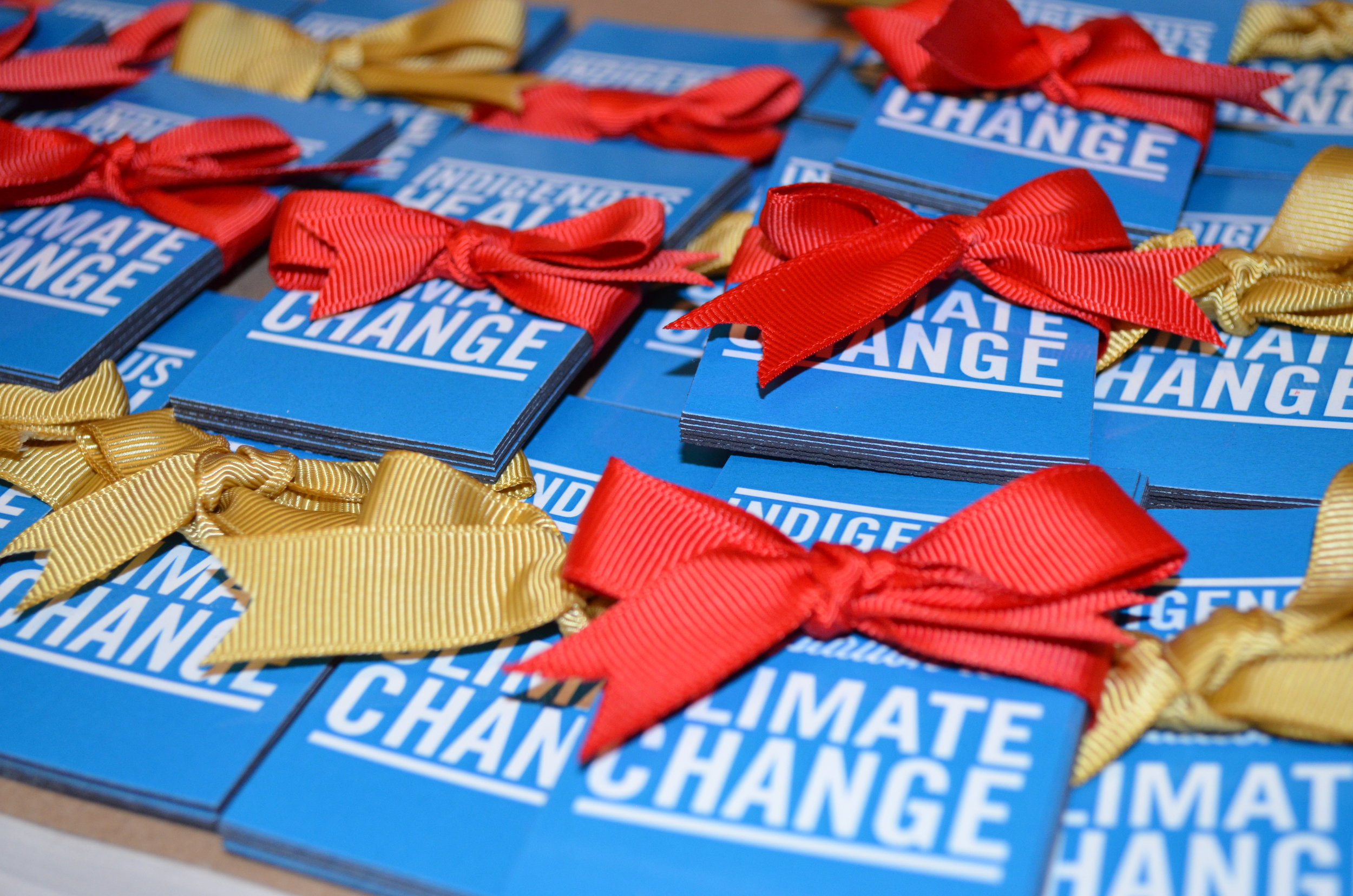
On Thursday August 14th, I was able to present my own work from my MSc degree. This project looked at the impact of heat stress resulting from heat waves on human health in rural communities in Southern Ontario. In particular, I looked at the ways which heat waves impact the rate of admissions to rural hospital emergency rooms in Southern Ontario, as a follow up project to looking at the impacts of heat stress on dairy cow on-farm mortalities. While presenting my poster I handed out small infographic cards to interested visitors. These 4”x6” cards showed the highlights of the research in a clear and easy to ready format which allowed me to make connections with individuals who will be good contacts for my PhD work with IHACC.
Although I accomplished quite a bit while in Montreal, it was not all work and no play! Montreal was a great chance to reconnect with friends from IHACC who live all over Canada, and a chance to visit with colleagues from the 2014 CoPEH Canada Field Course in June.
Here’s to looking forward to EcoHealth 2016 in Melbourne, Australia on December 5-7!
 Congratulations to Dr. Cunsolo Willox and Inez Shiwak!
You can "Like" her Documentary on FaceBook.
Congratulations to Dr. Cunsolo Willox and Inez Shiwak!
You can "Like" her Documentary on FaceBook.
Her team's documentary trailer is now available on YouTube:
[youtube https://www.youtube.com/watch?v=tLQy2vOcuTk&w=560&h=315]
DSC_0117
Reflection written by Carlee WrightThis summer I was fortunate to have the opportunity to travel to Rigolet for the first time with Dr. Harper. Having this experience before beginning my Masters was very valuable, as it allowed me to introduce myself to the community and get to know the customs and way of living of the people with whom I will work closely with in the future.

DSC_0315
During this trip, I worked alongside members of the Nunatsiavut government to collect preliminary data on secondary water contamination. The results of the surveys and water samples will provide a basis for my upcoming research, and having this hands-on experience has really helped me to understand the reasons behind the research and the issues faced around water in the North.
Aside from research, I had a few opportunities to explore and eat local foods. These were some of the highlights of my trip, as I love to experience new things. Trout, partridge, goose and fresh eggs were among some of the foods prepared for us, and I was excited to try each of them! Food sharing is an important part of Inuit culture, and I felt very fortunate to be offered so many kinds of country food on my first visit.
Throughout my time in Rigolet, the genuine kindness and hospitality of the residents never failed to amaze me. I was not expecting to be so warmly welcomed into people’s homes, and this contributed to a very enjoyable first experience. I can’t wait to visit again to further familiarize myself with the community and experience more of the unique and wonderful culture in this remote settlement.
 Just last week I was sitting in the office, typing away, when Sheri came in to ask if I’d be interested in going to the IHACC results sharing meeting with her…in Iqaluit. Three days later, I packed my bags and headed onto my flight to Iqaluit!
I wasn’t sure what to expect on this trip, but what I’ve learned and experienced have been unlike anything I’ve ever done before! We arrived on Sunday afternoon to the bustling Iqaluit Airport. Although we were still in Canada, there were some very subtle differences that I noticed. For example, it was so cool to see signs at the airport in English but still mostly Inuktitut! Also, it turns out that the taxi’s in Iqaluit all had a flat rate of $6/person, no matter your destination. Pretty cool concept if you ask me!
I got settled into the student housing along with Anna, who had been here for the past couple of weeks doing research for her Masters. She became my personal tour guide (I know, I got pretty lucky!) and brought me to the Visitors Centre to see some amazing artifacts. We met up with Sheri and James that evening for dinner. We ended up at the Navigator Restaurant. It was a perplexing menu of Chinese food, country food, and Canadian classics! We parted ways and I was ready for bed in preparation for tomorrow’s meeting.
Anna and I both got up early to head off to the NRI to prepare for the IHACC Results Sharing meeting. There were about 20-24 people that came by for this meeting throughout the day. Listening to everyone speak out the research that is being done in Iqaluit and up North was incredible – from food security, to climate change adaption, gender, and AGI research, I was thoroughly impressed!
One of my favourite moments was meeting a surveyor named Tommy – he was always making jokes! From talks about ‘dumpcano’ to warning me about polar bear sightings, needless to say, it was always entertaining to talk to him!
After the meeting, Anna, Knut and I went to the museum to see a Norwegian exhibit on the Northern Lights. The photos were absolutely stunning – I can only imagine how beautiful the view must be in Iqaluit when those lights are visible in the night sky. I also bought my first souvenir there: a classic Inukshuk. We ended up going to the Gallery at the Frobisher hotel and the food was spectacular! Something that was extremely fascinating was seeing people come into the restaurants to sell carvings, jewelry or art work. It was such a relaxing and welcoming environment that I couldn’t imagine seeing elsewhere!
On the last day in Iqaluit, Anna and I got to witness Sheri make her first purchase of a souvenir here! And she chose a good one! We took a taxi up to Apex afterwards and although it was a nauseous and bumpy ride to get there, the view was magnificent. The peace and serenity at Apex was unparalleled.
Before I knew it, it was almost time to go back home! I will always remember how beautiful a place Iqaluit is, how friendly the people are, and how peaceful it was. I am so thankful for the opportunity to travel up to Iqaluit and experience everything that I did! Special thanks to Sheri, James, and Anna for making this trip so memorable. Next time, if anyone ever pops into the office asking if I’d like to leave in three days and get to travel for work – I will undoubtedly say, “YES! Of course!”
http://www.cwn-rce.ca/young-professionals/workshops/upcoming/north-bay-indigenous-knowledge-workshop/

Sierra's field work is progressing very well. She has been in Uganda for 3 weeks to conduct qualitative field research as a follow-up to their quantitative analyses of Acute Gastrointestinal Illness (AGI) in the Batwa-Pygmies residing in the Kanungu district of southwest Uganda. Sierra is co-supervised by Drs. Lea Berrang-Ford and Sherilee Harper.
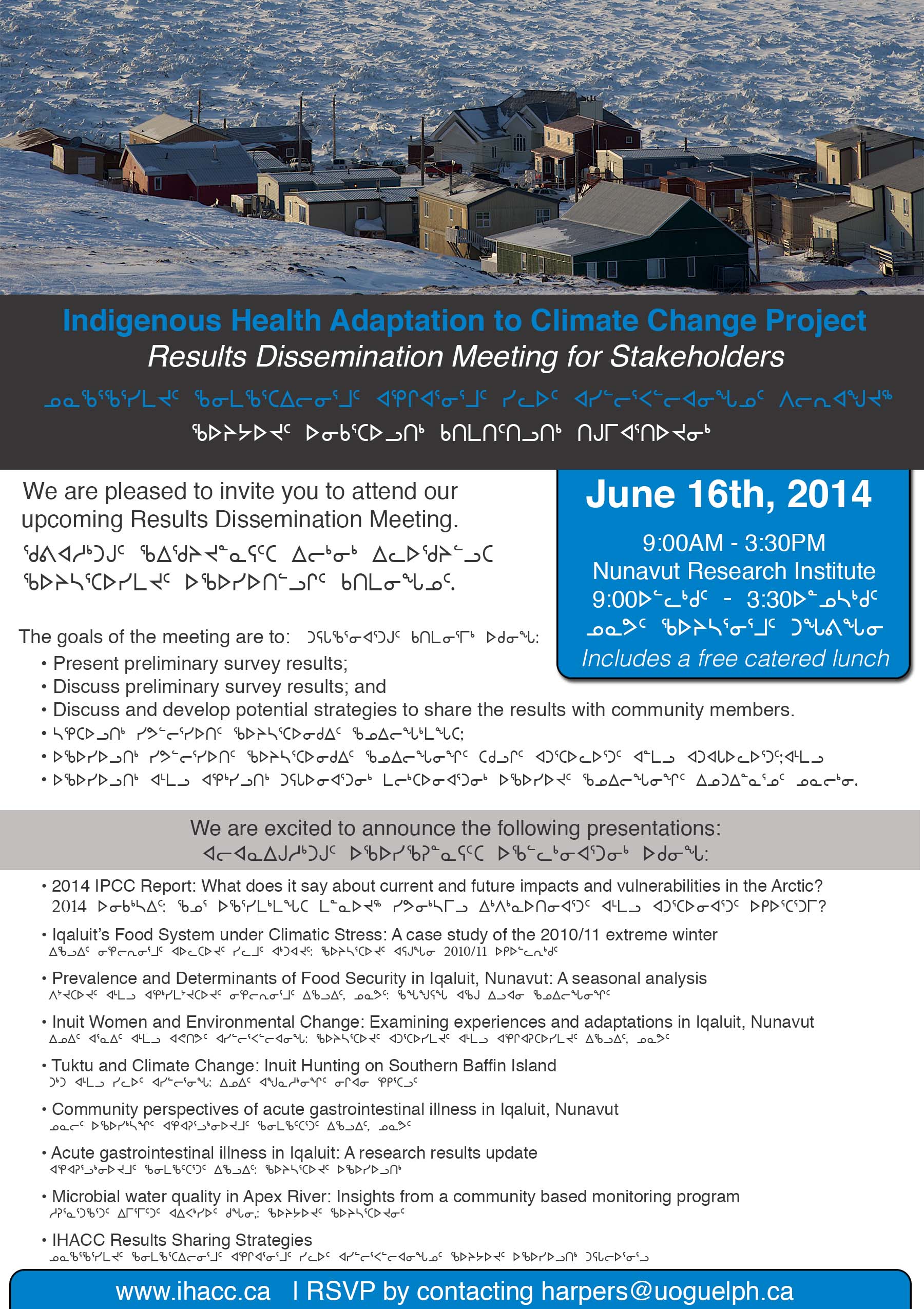
Want to learn and discuss some of the research results from the IHACC surveys in Iqaluit? Want to hear about climate change impacts on food security and stomach illness? Come to our research results sharing meeting in Iqaluit on Monday June 16 at the Nunavut Research Institute!
RSVP to harpers@uoguelph.ca
The Indigenous Health Adaptation to Climate Change project holds an annual planning meeting, and this year the meeting was hosted by Guelph.
Check it out! http://www.youtube.com/watch?v=eQ42dKFSDv4
 I wanted to congratulate Jenifer Truong on her acceptance into the McMaster Medical School program. Jen has been a dedicated team member and research assistant working on Indigenous environmental health research projects.
Best wishes to Jen as she embarks on this exciting and challenging medical school adventure!
(summer student and incoming MSc student)
 The biostatistics symposium presented a diverse range of topics on food safety and modeling of foodborne illness. I found it interesting to learn about the close relationship that exists between the sciences and math, and how important it is for both to collaborate in order find effective solutions to food safety issues. I enjoyed the presentation by Aamir Fazil on using statistics to determine the best point of intervention during chicken processing, in order to reduce contamination and/or human infections. It was effective in conveying how complex food production systems are, and how difficult it can be to make successful changes to improve human health.
I was also particularly interested in a talk by Kate Thomas on estimating the number of cases of foodborne illness in Canada. It was shocking to learn that millions of Canadians are affected each year, yet very few of them are actually diagnosed and reported. This makes it extremely difficult to accurately estimate incidence of illnesses and the burden on the health system. This is where mathematical and statistical models become key, and the lecture made it clear that even with these tools there are still many uncertainties.
Overall, the symposium was valuable in reinforcing the idea that disciplines need to be combined in order for researchers and professionals to be most successful in their work. This concept applies not just to the food safety industry, but across all academic fields, and it is important to recognize this connection.
(summer student and incoming fourth years honours thesis student)
After being made aware that in most if not all aspects of research requires knowledge of statistics, I was very intrigued and excited to learn more about how researchers were incorporating statistics and mathematical models into their projects. At first, I was afraid that it would be difficult to follow along with the topics presented, however, upon attending the symposium, I feel more adept and able to take on various challenges with statistics in research.
It was refreshing to see the collaborations between mathematicians, statiscians and bioscience researchers. As the IHACC project will involve a lot of analysis of how climate change impacts food safety and security, it was interesting to learn about how to estimate the number of cases of FBI in Canada and what needs to be accounted for in collecting the data.
One presentation that stood out in particular was epidemiologist Kate Thomas’ topic on ‘Estimating the Number of Cases of Foodborne Illness in Canada.’ From her presentation, I learned that we had to take into account the amount of people that underreport foodborne illnesses, as well as the potential for the doctor to request a fecal sample, and the accuracy of the fecal sample testing itself when calculating the number of FBI per year. I also found the presentation by Amy Greer, CRC Chair of Population Disease Modelling, on ‘A primer for thinking about the introduction and spread of infectious diseases along the farm-to-fork continuum’ to be very intriguing. I find that I am able to critically think and become more aware of how infectious diseases are spread and the location/steps in which this can happen.
Overall, I found the theme of Foodborne Illness was very practical because there are over 75 million cases of FBI per year in the UC and over 4 million reported cases/year in Canada. The connection between research and statistics was also very well established and evidently presented at the symposium as well. What I learned was the importance of the fields of mathematics and statistics in the regulation of food safety. Whether it is risk assessments, the estimation of the burden of FBI and or the surveillance for outbreaks of food poisoning, statistics plays an essential role in this. I’m excited to begin the IHACC project and put the skills and knowledge that I’ve gained at this symposium to use!
I'm very eagerly awaiting Dr. Cunsolo Willox and collegues' new documentary film, Attutauniujuk Nunami/Lament for the Land. They will be premiering it at the International Congress of Arctic Social Sciences Eight Conference (ICASS VIII). Check it out: Film Premiere: Lament for the Land.
On May 1-2, 2014 the IK-ADAPT team met for workshop hosted at McGill on community based adaptation research in the Arctic. The workshop theme was “Beyond best practices: Challenges for community adaptation research”. Ellen MacDonald wrote a reflection on her experience at the meeting, and here is a word cloud summarizing some of the key things that she learned, found interesting, and/or surprised her:

The burden of Acute Gastrointestinal Illness (AGI) for Inuit in Iqaluit, Nunavut, Canada Background: Acute gastrointestinal illness (AGI) is an important global public health issue. The prevalence and risk factors related to AGI are unknown among Canadian Inuit and it is possible given their unique social, economic, and cultural conditions, these may differ compared with other Canadians. Objectives: This study (1) estimated the prevalence of AGI, and (2) identified risk factors for AGI for Inuit in Iqaluit, Nunavut, Canada. Methods: International burden of illness study methods were modified to reflect the Indigenous culture and Northern context of this study. Specifically, an EcoHealth framework was used to guide the research, which included principles of capacity development, transdisciplinarity, social equity, sustainability, and community participation. Two retrospective, cross-sectional surveys were conducted in Iqaluit in 2012 and 2013. Of the 1,055 individuals that participated in the survey, 694 self-identified as Aboriginal, which formed the basis of analysis. The prevalence of self-reported AGI was estimated using a case definition of diarrhea and/or vomiting in the past 14-days not due to pregnancy, drug or alcohol use, or diagnosed chronic conditions. Multivariable exact logistic regression was used to identify risk factors associated with AGI cases. Results: The 14-day prevalence of AGI for Inuit in Iqaluit was 12.8% in 2012 and 11.6% in 2013. Several, demographic, environmental and socio-economic factors were significantly associated with increased odds of AGI. Conclusions: Estimating the prevalence of AGI and identifying Inuit-specific risk factors for AGI, with continued Northern stakeholders' collaboration was intended inform and strengthen evidence-based policy to reduce the impact of AGI in Inuit populations. These results will be used to co-develop and co-implement a knowledge translation project with Northern project stakeholders and community members toward enhancing AGI-related public health decision-making processes in Nunavut, Canada.